Key Considerations for Designing a Meat Rail System
Designing a meat rail system properly at the start can make a major difference to workflow, carcass handling, hygiene, safety and future expansion. Whether you are extending an existing rail or installing a completely new system, the layout and supporting structure need to suit the way your site operates.
This guide explains the main points to consider before designing a meat rail system, from height and spacing through to support steelwork, refrigeration layout and additional handling equipment.
If you are reviewing options, you can also browse our full range of meat rail systems to see the types of rail and handling solutions available.
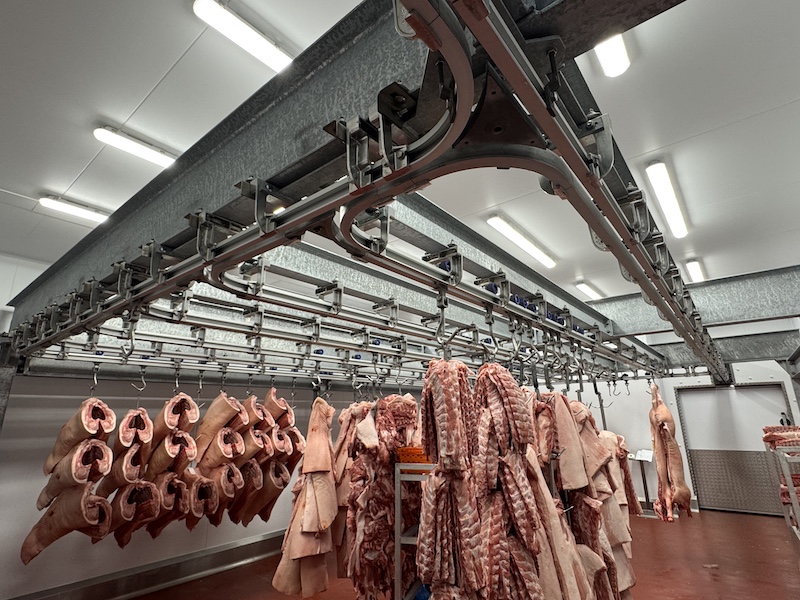
Extending an Existing System vs Installing a New System
Extending an Existing System
When extending an existing meat rail system, you are usually restricted by the current rail height, the supporting structure and the type of rail already installed. Compatibility is one of the most important factors, as the new section needs to work properly with the existing layout and handling process.
Installing a New System
A new installation gives you much more flexibility. You can design the meat rail around the available space, carcass type, workflow and future plans, rather than trying to work around an existing system.
Key Design Considerations for a Meat Rail System
A meat rail system should be designed around the way product moves through the building, the type of carcasses being handled, and the structure available to support the system safely.
Rail Height
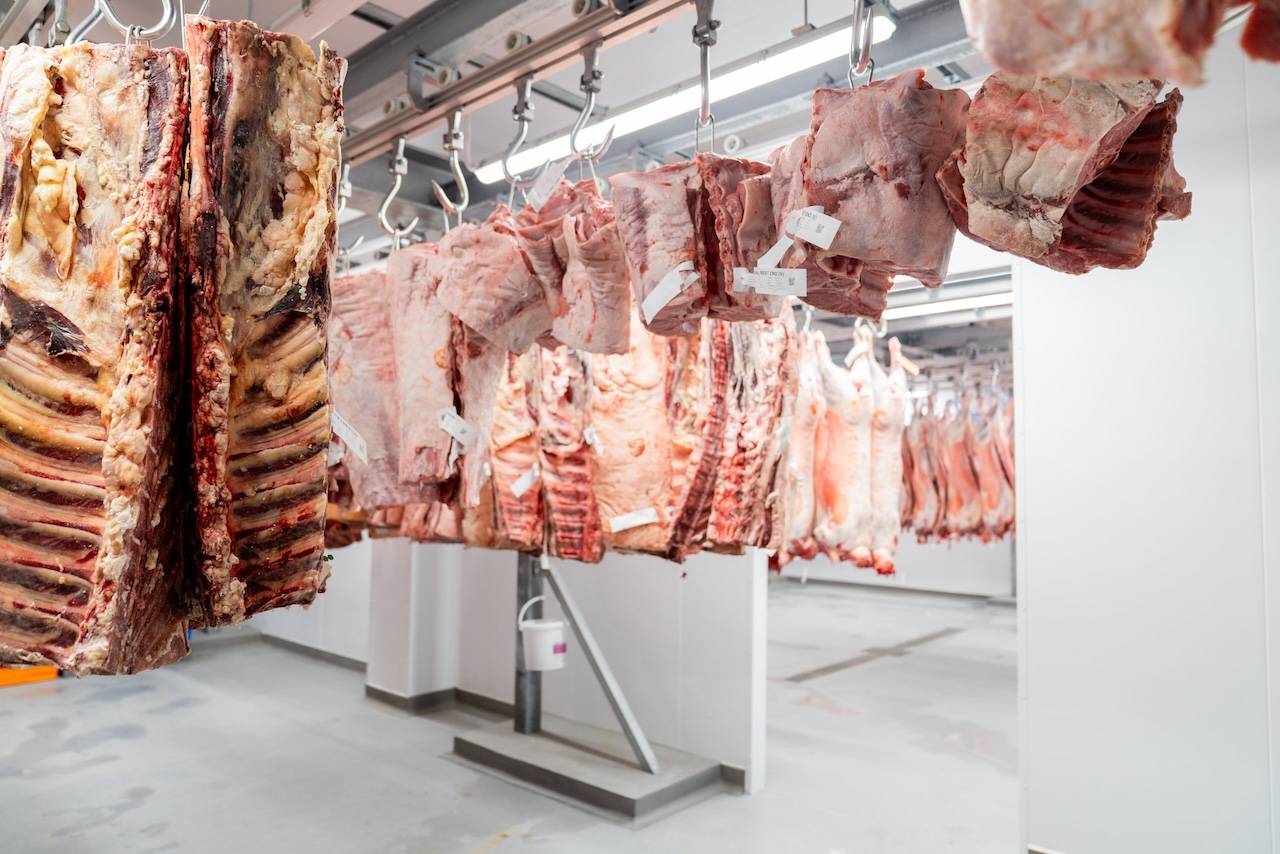
Height should be based on what is being hung. Larger carcasses such as cattle sides will need more clearance than smaller species, and the final height should also suit the handling method and available room height.
System Location
The rail system should support the operational flow of the building. Chillers should ideally be positioned near loading bays, and butchery areas should be located so carcasses can move efficiently between rooms.
Rail Spacing and Widths
Rail spacing depends on the carcasses being stored or moved. Sheep and deer require less spacing than pork or beef, so the design needs to account for both carcass size and the total number of carcasses to be handled.
Traffic and Access
The rail layout should avoid obstructing traffic routes, forklift movement, pallet handling areas and other busy parts of the building. Safe access for staff and maintenance is equally important.
Supporting Structure and Framework
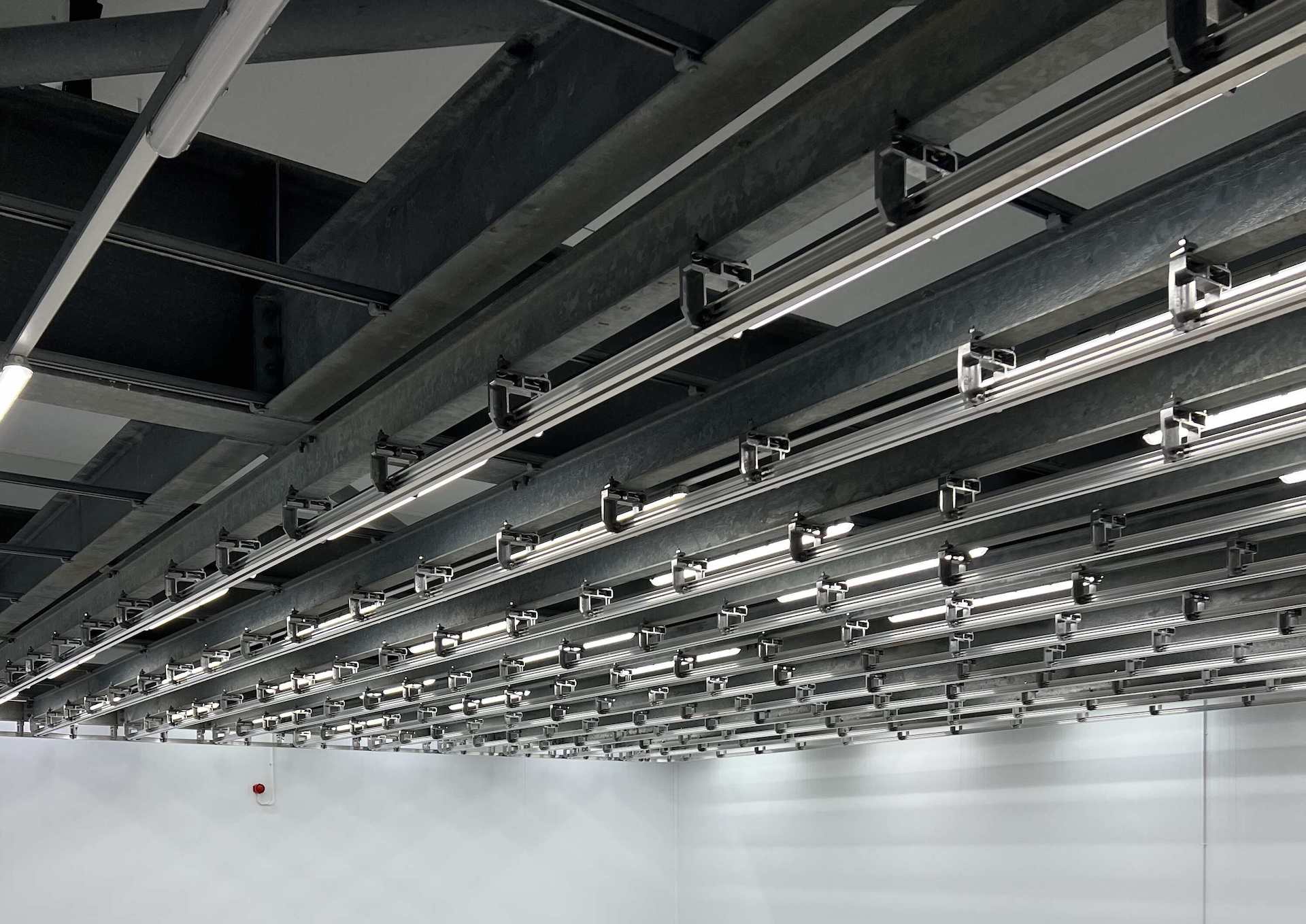
One of the most important parts of meat rail design is understanding what the building can safely support. Existing slabs, beams and structural steel may not always be suitable for the proposed loads, especially where large numbers of carcasses are being hung in one area.
In many cases, a self-supporting steel framework with columns is the best solution, as it spreads the load more effectively and avoids relying entirely on the building structure. Depending on the design, concrete pads may also be required for column positions.
Refrigeration and Chiller Layout
Refrigeration equipment needs to be considered as part of the rail design, not as a separate issue afterwards. Evaporators and coolers must be positioned so air can circulate properly without blowing directly onto carcasses or creating issues around supporting steelwork.
The layout should allow the chiller to work efficiently while still leaving enough space for rail movement, carcass storage and safe access for staff.
Additional Equipment to Consider
A meat rail system can often be improved with additional handling equipment that reduces manual effort and improves efficiency.
Meat Loading Arms
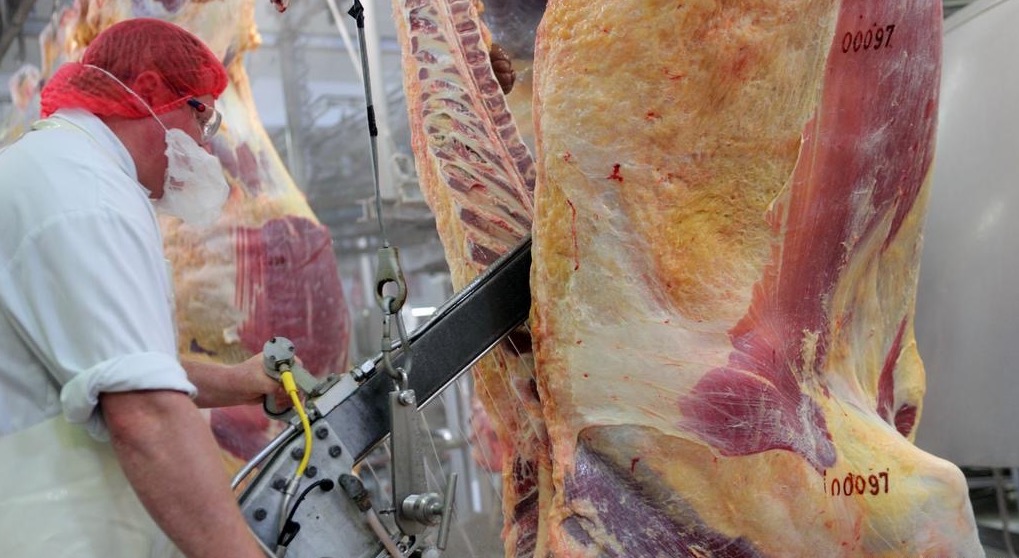
Meat loading arms can reduce the physical effort involved in lifting carcasses onto the rail and improve handling safety at the loading point.
Inline Scales
Inline scales allow carcasses or products to be weighed accurately within the rail system without disrupting flow.
Elevators and Lift Sections
Elevators and lift sections can be used where heights change within the building or where product needs to move between different levels safely and efficiently.
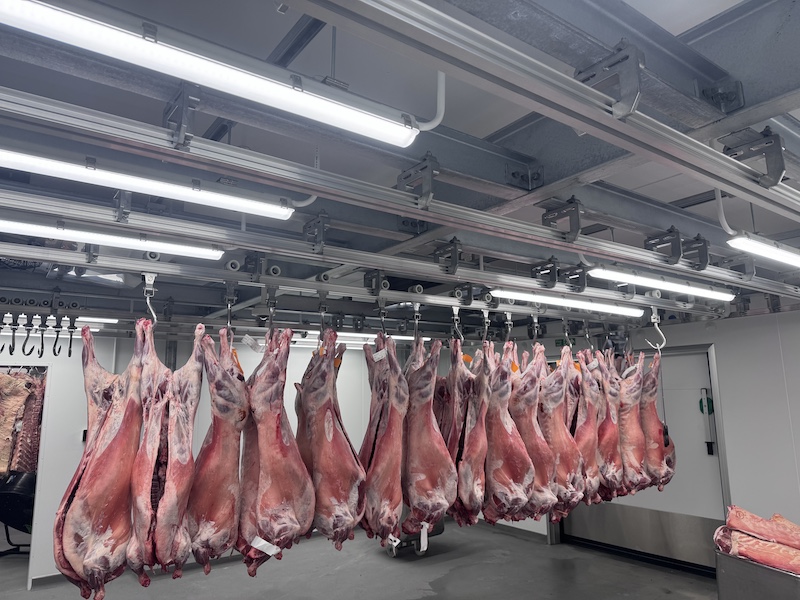
Why Good Meat Rail Design Matters
A properly designed meat rail system improves product flow, supports hygiene, reduces unnecessary manual handling and makes better use of the available building space. It also helps avoid costly changes later where heights, spacing or support steelwork have not been considered properly from the start.
Whether you are extending an existing rail or installing a new system, taking time to review the building layout, carcass types, handling process and support requirements will lead to a much better long-term result.
Need Help Designing a Meat Rail System?
AES Food Equipment can assist with meat rail system design, supply and installation. With decades of industry experience, we can help you plan the right layout for your operation, carcass type and building.
Frequently Asked Questions
What should be considered when designing a meat rail system?
Key points include rail height, carcass type, rail spacing, operational flow, traffic routes, support steelwork, refrigeration layout and any additional equipment needed.
Is it easier to extend an existing system or install a new one?
A new system usually offers more flexibility, while extending an existing one often means working around the current rail height, structure and layout constraints.
How is the correct rail height decided?
Rail height should be based on the type of carcasses being handled, the clearance required and the practical handling method within the building.
Does the building structure need to be checked?
Yes. The building structure, slabs and supporting steel should always be assessed to confirm they can safely carry the loads involved.
What extra equipment can be added to a meat rail system?
Loading arms, inline scales and elevators are common additions that can improve handling efficiency and reduce manual effort.
Conclusion
Good meat rail system design starts with understanding the product, the building and the process. By considering rail height, spacing, location, support structure and additional handling equipment at the outset, you can create a system that works efficiently and safely for the long term.
If you are planning a new installation or extension, taking the time to get the design right early will usually save time, cost and disruption later.