Designing a meat rail system properly at the start can make a major difference to workflow, carcass handling, hygiene, safety and future expansion. Whether you are extending an existing rail or installing a completely new system, the layout and supporting structure need to suit the way your site operates.
This guide explains the main points to consider before designing a meat rail system, from height and spacing through to support steelwork, refrigeration layout and additional handling equipment.
If you are reviewing options, you can also browse our full range of meat rail systems to see the types of rail and handling solutions available.
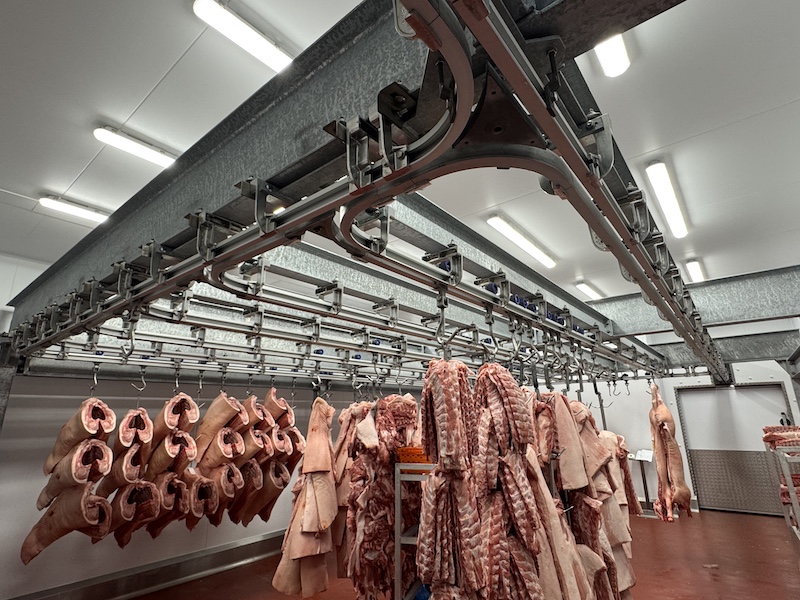
Extending an Existing System vs Installing a New System
Extending an Existing System
When extending an existing meat rail system, you are usually restricted by the current rail height, the supporting structure and the type of rail already installed. Compatibility is one of the most important factors, as the new section needs to work properly with the existing layout and handling process.
Installing a New System
A new installation gives you much more flexibility. You can design the meat rail around the available space, carcass type, workflow and future plans, rather than trying to work around an existing system.
Key Design Considerations for a Meat Rail System
A meat rail system should be designed around the way product moves through the building, the type of carcasses being handled, and the structure available to support the system safely.
Rail Height
Height should be based on what is being hung. Larger carcasses such as cattle sides will need more clearance than smaller species, and the final height should also suit the handling method and available room height.
System Location
The rail system should support the operational flow of the building. Chillers should ideally be positioned near loading bays, and butchery areas should be located so carcasses can move efficiently between rooms.
Rail Spacing and Widths
Rail spacing depends on the carcasses being stored or moved. Sheep and deer require less spacing than pork or beef, so the design needs to account for both carcass size and the total number of carcasses to be handled.
Traffic and Access
The rail layout should avoid obstructing traffic routes, forklift movement, pallet handling areas and other busy parts of the building. Safe access for staff and maintenance is equally important.
Supporting Structure and Framework
One of the most important parts of meat rail design is understanding what the building can safely support. Existing slabs, beams and structural steel may not always be suitable for the proposed loads, especially where large numbers of carcasses are being hung in one area.
In many cases, a self-supporting steel framework with columns is the best solution, as it spreads the load more effectively and avoids relying entirely on the building structure. Depending on the design, concrete pads may also be required for column positions.
Refrigeration and Chiller Layout
Refrigeration equipment needs to be considered as part of the rail design, not as a separate issue afterwards. Evaporators and coolers must be positioned so air can circulate properly without blowing directly onto carcasses or creating issues around supporting steelwork.
The layout should allow the chiller to work efficiently while still leaving enough space for rail movement, carcass storage and safe access for staff.
Additional Equipment to Consider
A meat rail system can often be improved with additional handling equipment that reduces manual effort and improves efficiency.
Meat Loading Arms
Meat loading arms can reduce the physical effort involved in lifting carcasses onto the rail and improve handling safety at the loading point.
Inline Scales
Inline scales allow carcasses or products to be weighed accurately within the rail system without disrupting flow.
Elevators and Lift Sections
Elevators and lift sections can be used where heights change within the building or where product needs to move between different levels safely and efficiently.
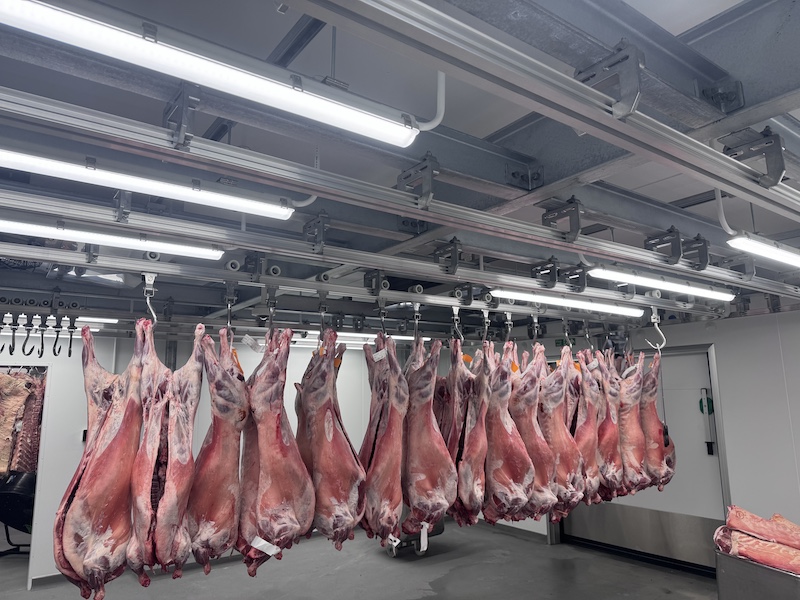
Why Good Meat Rail Design Matters
A properly designed meat rail system improves product flow, supports hygiene, reduces unnecessary manual handling and makes better use of the available building space. It also helps avoid costly changes later where heights, spacing or support steelwork have not been considered properly from the start.
Whether you are extending an existing rail or installing a new system, taking time to review the building layout, carcass types, handling process and support requirements will lead to a much better long-term result.
Need Help Designing a Meat Rail System?
AES Food Equipment can assist with meat rail system design, supply and installation. With decades of industry experience, we can help you plan the right layout for your operation, carcass type and building.
Frequently Asked Questions
What should be considered when designing a meat rail system?
Key points include rail height, carcass type, rail spacing, operational flow, traffic routes, support steelwork, refrigeration layout and any additional equipment needed.
Is it easier to extend an existing system or install a new one?
A new system usually offers more flexibility, while extending an existing one often means working around the current rail height, structure and layout constraints.
How is the correct rail height decided?
Rail height should be based on the type of carcasses being handled, the clearance required and the practical handling method within the building.
Does the building structure need to be checked?
Yes. The building structure, slabs and supporting steel should always be assessed to confirm they can safely carry the loads involved.
What extra equipment can be added to a meat rail system?
Loading arms, inline scales and elevators are common additions that can improve handling efficiency and reduce manual effort.
Conclusion
Good meat rail system design starts with understanding the product, the building and the process. By considering rail height, spacing, location, support structure and additional handling equipment at the outset, you can create a system that works efficiently and safely for the long term.
If you are planning a new installation or extension, taking the time to get the design right early will usually save time, cost and disruption later.
In a sector where efficiency, hygiene, and regulatory compliance are non-negotiable, the right meat rail system is not just a convenience, it’s a cornerstone of operational success.
Whether you’re operating a high-volume abattoir, a specialist deer larder, or a retail butchery, your rail system must be engineered to suit your unique process. Anything less risks inefficiency, contamination, and avoidable downtime.
At AES Food Equipment, we’ve supplied and designed custom meat rail systems across the UK for over a decade and in our family for over 5 decades. Our experience confirms what many discover too late: generic rail systems fail to meet the realities of modern meat processing.
What Is a Meat Rail System – and Why It Matters
A meat rail system is an overhead framework that supports the movement of carcasses through a meat processing business. Some key processing zones include slaughter, dressing, chilling, cutting, and dispatch. It ensures safe handling, maintains hygienic clearance, and supports the pace of production.
Core components include:
- Track: Typically, aluminium twin track (modern standard) or galvanised round bar (legacy systems)
- Rollers and hooks: twin track meat hooks with nylon roller wheels or aluminium tubular hooks to galvanised skid hooks.
- Switches and junctions: Directing carcass movement around the area / chiller
- Mounting system: Bespoke support steel or cleats suited to your ceiling height and infrastructure – one of the most important parts of the rail system
Your rail system forms the backbone of your production layout. If it's wrong, everything else suffers.
Why a One-Size-Fits-All Approach Doesn’t Work
Every site is different. A rail layout that works in one facility may completely fail in another. The reasons are practical:
- Species variation – Cattle, pigs, lambs, deer: all demand different rail specs and hook styles
- Carcass volume and throughput – 10 deer a week vs. 50 cattle a day requires vastly different structural and flow considerations
- Ceiling heights and physical constraints – Old farm buildings, converted units, or purpose-built plants all need tailored designs
- Workflow preferences – Kill-to-chill routes, dispatch timings, multi-room flow all differ between businesses
- Future scalability – Planning for expansion now avoids costly refits later
Designing your system without factoring in these variables will result in either inefficiency or costly rework.
Key Considerations When Designing a Meat Rail System
1. Structural Load & Clearance
- Ensure the supporting steel sits above the rail and roller path, away from refrigeration equipment to ensure good airflow
- Allow at least 300mm clearance from the floor to the lowest part of the carcass
- Structural calculations must confirm safe load-bearing for peak carcass weight and volume
2. Material Selection: Aluminium vs. Galvanised
Aluminium Twin Track:
- Hygienic and lightweight
- Corrosion-resistant and easy to clean
- Now the standard for modern installations
Galvanised Round Bar:
- Lower upfront cost
- Common in legacy systems
- Requires more frequent cleaning and maintenance
Your choice depends on your budget, hygiene requirements, and whether you’re building new or upgrading an old system.
3. Roller, Hook & Switch Compatibility
- Choose meat hooks / rollers that match your rail
- Hooks must suit the species and method of dressing (e.g., gambrels for pigs or 18mm hooks for beef)
- Switches must support the roller type—mixing components can lead to breakdowns
4. Efficient Flow Planning
- Map the process for your facility
- Design for minimal manual handling and backtracking
- Use switches, junctions, and gravity flow where possible to improve efficiency
5. Maintenance and Hygiene
- Consider how the system will be cleaned
- Avoid dead zones or overlaps that trap organic matter
- Twin track offers a smoother, easier-to-clean surface than round bar rail
6. Room for Growth
- Include capped ends or pre-installed junctions if future expansion is likely
- Modular systems allow easier bolt-on rail sections or transitions later
Avoiding Common Mistakes
1. Insufficient Headroom
- The most frequent and costly error
- Without adequate clearance above the rail line, supporting steel may block hook travel or cause carcasses to hang too low
2. Mismatched Equipment
- Rollers and switches from different systems may not align
- Hook types that don’t fit the rail or curve radius will cause jamming or wear
3. Poorly Planned Flow
- Cross-contamination risk increases if dirty and clean zones overlap
- Without a clear directional path, staff handling time increases and efficiency drops
4. Overlooking Compliance
- Carcasses must remain above the floor at all times
- Structural designs must meet hygiene, inspection, and FSA criteria
5. Undervaluing Expert Consultation
- Buying on price rather than fit-for-purpose design leads to retrofit costs and operational disruption
Our Process: Design-First, Not Product-First
AES Food Equipment delivers rail systems based on a proven consultative process:
- Operational Briefing – We assess throughput, species, workflow, and hygiene standards
- Site Visit – Our team measures, photographs, and maps available headroom and load-bearing points
- CAD Design & Quotation – Layouts include switches, brackets, and support steel with clear costing
- Installation or Supply – We provide either full installation or supply-only with layout support
- Aftercare & Upgrades – Ongoing access to replacement rollers, hooks, and additional components
Our systems include:
- Aluminium twin track with heavy-duty meat hooks / rollers
- Specialist hooks and gambrels for pigs, cattle, and sheep
- Switches and returns to manage multi-room flow
- Custom-fabricated steelwork for ceiling mounting or floor supports
- Roller refurbishment and compatibility upgrades for older rail system
Real-World Examples: Case Studies
Avalon Farm Butchery at The Newt in Somerset
At Avalon Farm, a premium estate committed to sustainable and regenerative farming, the goal was to create a high-quality, on-site butchery facility that reflected their brand values. Working alongside the estate team, AES designed and installed a full aluminium twin track rail system, complete with custom hooks and roller bodies. The layout was tailored to their product flow—from slaughter to cutting room—with consideration for hygiene zoning and animal welfare.
Key features:
- Purpose-built layout for seamless movement between slaughter, chill, and processing
- Custom stainless steel workstations and rail returns
- Organ rail included for internal product handling
- Clear floor clearance maintained throughout to meet audit requirements
This installation elevated both operational performance and customer-facing presentation, supporting Avalon’s high-end meat offering.
Gloucester Services Farmshop Butchery
Gloucester Services is renowned for showcasing local producers and artisan food. Their in-house butchery needed a robust and hygienic rail system to support growing demand. AES provided a modular aluminium twin track system, maximising the use of a restricted ceiling height without compromising compliance.
Highlights:
- Delivered a low-profile rail solution to work within tight structural limits
- Installed switches and rail curves to optimise workflow between chillers and prep areas
- Provided a long-term solution that allows for future system extension
This solution ensured that the butchery maintained its artisan ethos while improving throughput and efficiency.
Why Choose AES Food Equipment?
- UK-based with over 12 years of industry experience
- Full technical design and CAD layout capability
- Strong supply network with specialist European manufacturers
- Exclusive roller and hook systems built for abattoir environments
- Reliable consultation and aftersales support
We understand meat processing. From small game larders to high-volume abattoirs, our systems are built around your process—not the other way around.
Conclusion: Build a Rail System That Supports Your Business
Investing in a tailored meat rail system pays dividends in efficiency, hygiene, and operational resilience. Cutting corners leads to poor clearance, non-compliance, and unnecessary costs down the line.
Speak to our team today for a no-obligation consultation and let us help you design a system that works the way your business does.
AES Food Equipment – Built Around Your Business.
A well equipped abattoir is essential for ensuring efficient, hygienic, and compliant meat processing. From stunning and bleeding to dressing, evisceration, and by-product processing, every stage of slaughter requires specialist abattoir equipment that meets industry regulations and maximises efficiency.
At AES Food Equipment, we supply a comprehensive range of abattoir equipment for the slaughter of beef, sheep, pigs, venison, poultry, and rabbit.
Whether you're upgrading an existing kill line or setting up a new facility, our high-quality machinery ensures safe, reliable, and high performance operations.
Stunning Abattoir Equipment – Humane and Effective Stunning Solutions
Proper stunning is a critical first step in the slaughter process, ensuring humane handling and compliance with welfare regulations. We supply:
- Stunning boxes & restrainers – Designed for secure animal positioning before stunning.
- Electric stunning systems – Effective for pigs and sheep, offering controlled stunning with EU complaint systems.
- Captive bolt stunners – Ideal for cattle and smalls, these units provide an instant and effective stun.
Our stunning equipment is sourced from leading manufacturers including Accles & Shelvoke, Jarvis and Hubert Haas, ensuring precision, reliability, and compliance with industry standards.
Bleeding Equipment – Secure Handling for Efficient Processing
Efficient bleeding is crucial for ensuring high-quality meat and proper carcass handling. Our bleeding equipment includes:
- Bleed shackles – Securely hold animals during the bleeding process.
- Bleed hoists – Designed for lifting carcasses quickly during exsanguination.
- Transfer platforms – Safe and ergonomic solutions for slaughterhouse staff working on kill lines.
Our bleeding solutions are built to support both high throughput abattoirs and small scale slaughterhouses alike.
Dressing Abattoir Equipment – Efficient Carcass Preparation
Once bleeding is complete, dressing equipment is used for removing hides, hair, pelts, or feathers, ensuring carcasses are clean and ready for processing. We supply:
- Hide pullers – For efficient removal of cattle hides.
- Dehairing machines – Essential for pig processing, ensuring thorough cleaning.
- Pelt pullers & punching arms – Designed for safe and effective pelt removal.
- Plucking machines – Essential for poultry processing, ensuring efficient feather removal.
Our dressing equipment is designed for speed, hygiene, and precision, helping abattoirs increase throughput while maintaining quality.
Evisceration Equipment – Precision for Hygienic Processing
Evisceration is a key stage in carcass processing, requiring specialist equipment to ensure hygiene and efficiency. We supply:
- Leg spreaders – Ensuring easy access to the internal cavity for gut removal.
- Gut conveyors – Streamlining the transport of offal and reducing manual handling.
- Rise & fall platforms – Providing operators with safe and adjustable access during evisceration.
Designed for ease of use and hygiene, our evisceration equipment meets the highest industry standards.
Saws & Tools – Leading Brands for Precision Cutting
High quality saws and cutting tools are essential for efficient and accurate carcass processing. We supply a full range of saws and hydraulic tools from leading brands, including:
- Jarvis, Freund, and Kentmaster saws – Renowned for durability and performance.
- Breaking saws & carcass splitting saws – Precision tools for portioning and cutting.
- Hydraulic cutting tools – Improving efficiency and reducing operator fatigue.
These industry leading tools ensure smooth operation and precise cuts, meeting the demands of small and large scale abattoirs.
By-Product Processing – Maximising Efficiency
Efficient by-product processing ensures better resource utilisation and hygiene compliance. We supply:
- Stomach washing machines – Ensuring clean and efficient processing.
- Feet dehairers – Perfect for processing sheep and cattle feet for additional revenue streams for your abattoir.
- Refiner machines & gut blowers – Streamlining offal and by-product handling.
These systems help abattoirs maximise yield and efficiency, reducing waste and improving productivity. They also ensure your abattoir is utilising every revenue stream possible.
Meat Rail & Dispatch Machinery – Seamless Carcass Handling
Efficient meat rail systems are crucial for smooth carcass transport and storage. We supply:
- Twin track meat rail systems – Designed for high-capacity abattoirs and meat processing plants.
- Tubular round bar rails – Offering versatile carcass movement solutions.
- Meat loading arms – Improving carcass handling efficiency.
Our custom-designed rail systems ensure seamless processing and cold storage integration.
Consumables – Essential Supplies for Daily Operations
In addition to abattoir equipment, we stock a full range of abattoir consumables, including:
- Knives & blades – Precision tools for cutting and processing.
- Protective aprons – Ensuring safety and hygiene compliance.
These consumables are essential for maintaining hygienic and efficient operations in any slaughter facility.
Your Trusted Supplier for Abattoir Equipment
At AES Food Equipment, we provide a complete range of abattoir equipment for beef, sheep, pig, poultry, rabbit, and venison slaughter. Our solutions are designed to maximise efficiency, ensure compliance, and improve safety across all areas of meat processing.
Whether you need stunning equipment, carcass dressing tools, saws, meat rails, or consumables, we have the right products for your abattoir or slaughterhouse.
Browse our full range of abattoir equipment today or contact us for expert advice on the best solutions for your facility.
Choosing the Right Hooks for Your Butchery or Abattoir
Meat hooks are an essential tool in the meat processing industry, enabling efficient handling, storage, and transportation of carcasses. Whether you operate a small butcher shop, a large abattoir, or a food processing facility, selecting the right meat hook is crucial for maintaining hygiene, workflow efficiency, and safety.
At AES Food Equipment, we supply a comprehensive range of meat hooks to meet the needs of butchers, abattoirs, and food producers across the UK and worldwide. In this guide, we’ll explore the different types of meat hooks available and their applications.
Butcher S Hooks – A Versatile Solution for Butchers and Meat Processors
Butcher S hooks are widely used in the industry, providing an effective and hygienic way to hang meat. They are available in a range of sizes and weight capacities, making them suitable for:
- Small butcher shops looking for hooks to hang and display cuts of meat.
- Domestic users processing meat at home.
- Large-scale meat producers requiring heavy duty hooks for handling full carcasses.
Our stainless steel butcher S hooks are designed for durability and hygiene, ensuring they meet food safety regulations. Explore our full range of butcher S hooks here.
Abattoir Hooks and Chains – Heavy Duty Options for Slaughterhouses
In abattoirs, hooks and chains play a critical role in carcass processing and movement along the production line. We supply a variety of options to suit different applications, including:
- Bleed shackles – Securely hold animals during the bleeding process.
- Spreader hooks – Support carcasses to ensure proper airflow and hygiene.
- 7-link chains – Durable stainless steel chains used for carcass handling and transport.
Our high-strength abattoir hooks and chains are designed for demanding environments, offering reliability and longevity.
Meat Rail Hooks – Designed for Smooth Carcass Movement
For facilities using overhead meat rail systems, choosing the correct hooks is vital for seamless operation. Our range includes:
- Twin track meat rail hooks – Suitable for standard overhead meat rail systems, allowing efficient carcass movement through processing areas.
- Tubular rail hooks (skids) – Designed for hanging and transporting carcasses in cold storage and processing facilities.
We supply a variety of meat rail hooks to suit different setups, ensuring compatibility with industry-standard rail systems.
Gambrels – Strong, Reliable Support for Carcass Processing
Gambrels are an essential tool for suspending carcasses securely during processing. We offer:
- A-Frame Gambrels – Sturdy, triangular gambrels suitable for lamb, pork, and venison.
- W-Gambrels – A thinner gambrel without additional support of the A, this design ideal for supporting sheep carcasses.
- Pig Gambrels – thick 10” gambrels for support pigs.
- Deer Gambrels – we can fabricate special deer gambrels for extra long widths.
Whether for small game or full-size pigs, our gambrels provide stable, efficient support for carcass handling.
Find the Right Hooks for Your Needs
At AES Food Equipment, we stock a wide selection of hooks, including butcher S hooks, abattoir hooks, meat rail hooks, and gambrels. Our hooks are built for strength, durability, and hygiene, meeting the needs of both small-scale and large-scale meat processors.
Browse our full range today or contact us for expert advice on the best hooks for your business.
Overview
AES Food Equipment collaborated with The Newt in Somerset to create a cutting edge butchery facility at Avalon Farm. Designed to enhance meat production and supply capabilities, this standalone facility supports The Newt’s hotel, retail outlets, and online shop, with a focus on quality, provenance, and sustainability.
The Challenge
The Newt required a facility that could handle full-carcass butchery across various species while maintaining rigorous hygiene, efficiency, and traceability standards. AES Food Equipment was entrusted with delivering a custom stainless steel meat rail system, along with essential hygiene and butchery equipment, all tailored to meet The Newt’s unique requirements.
Our Approach
Collaborative Design & Planning
Working alongside The Newt and their architects, AES Food Equipment contributed critical insights into the design of the loading bays, meat chillers, and butchery preparation rooms. These details enabled the architects to prepare comprehensive tender documents for contractors. During the tendering process, we supported contractors by addressing technical questions to ensure smooth bidding.
Partnering with CG Fry & Son
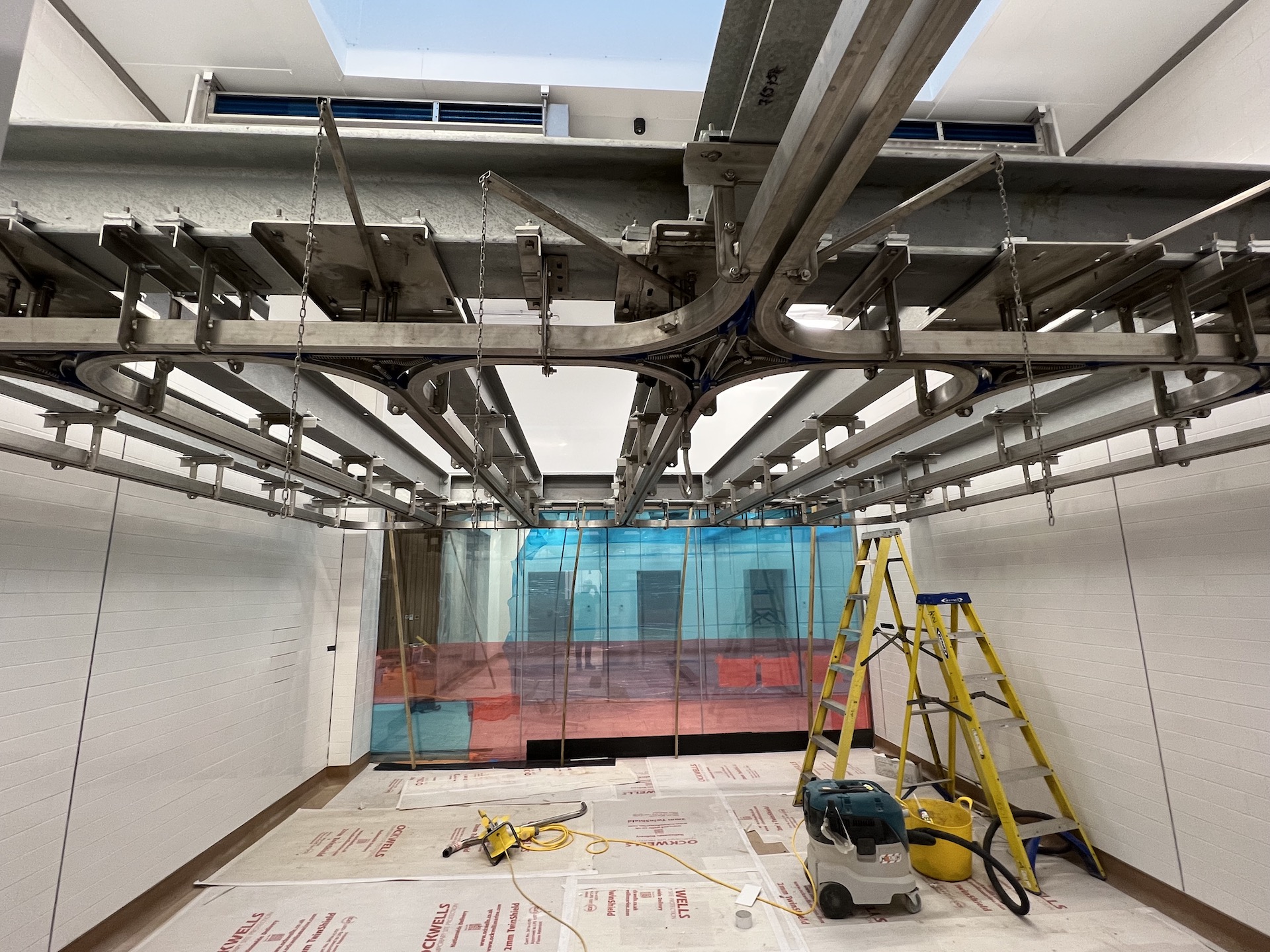
After CG Fry & Son won the tender, AES collaborated closely with them and The Newt throughout construction. This partnership ensured the seamless integration of our twin track stainless steel meat rail system and other equipment into the facility’s design.
Tailored Solutions
AES supplied and installed key equipment to meet The Newt’s needs:
- Twin-track stainless steel rail system for efficient carcass handling.
- Hygiene equipment, including boot and apron washes, to ensure compliance with food safety standards.
- A carcass loading arm to simplify loading onto the rail system.
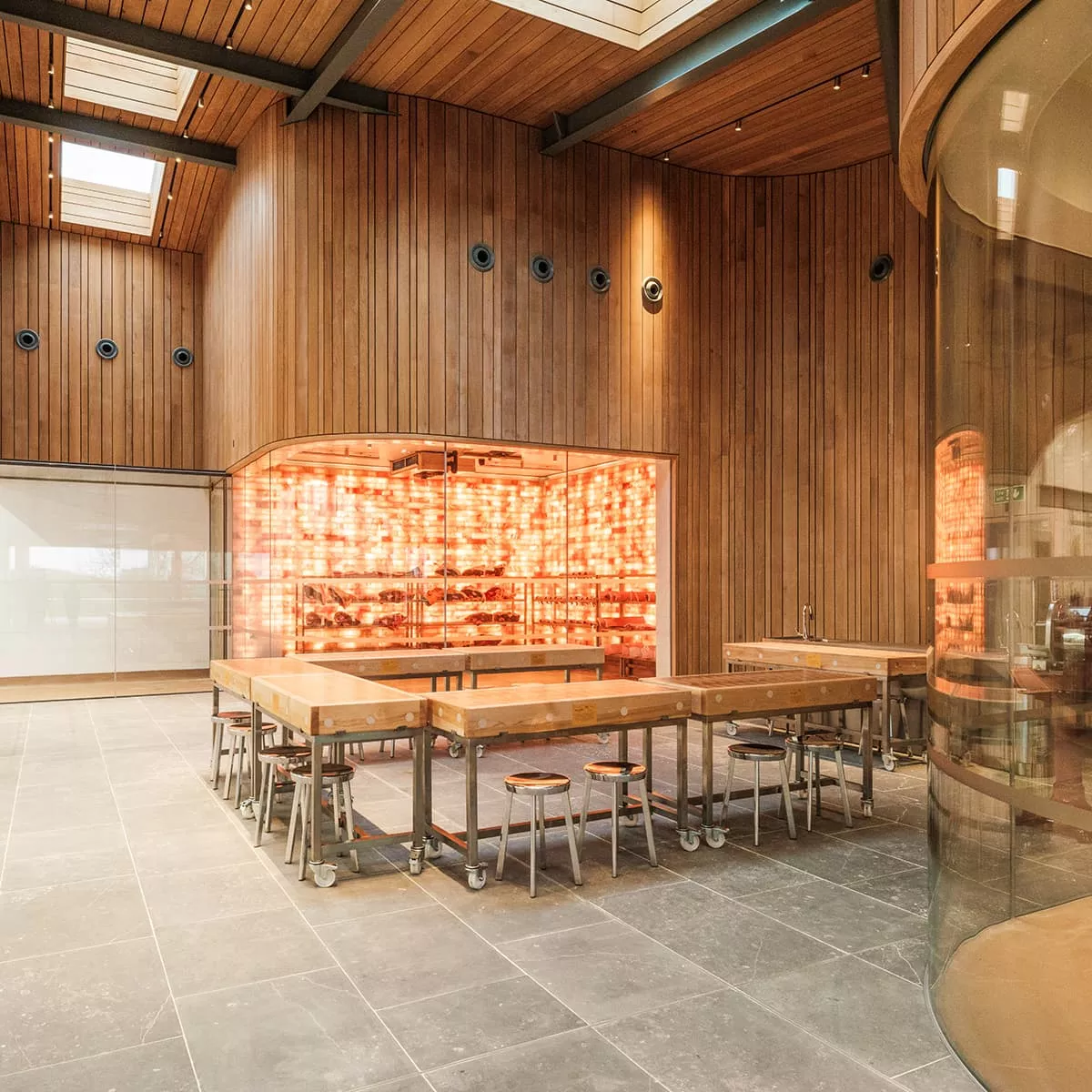
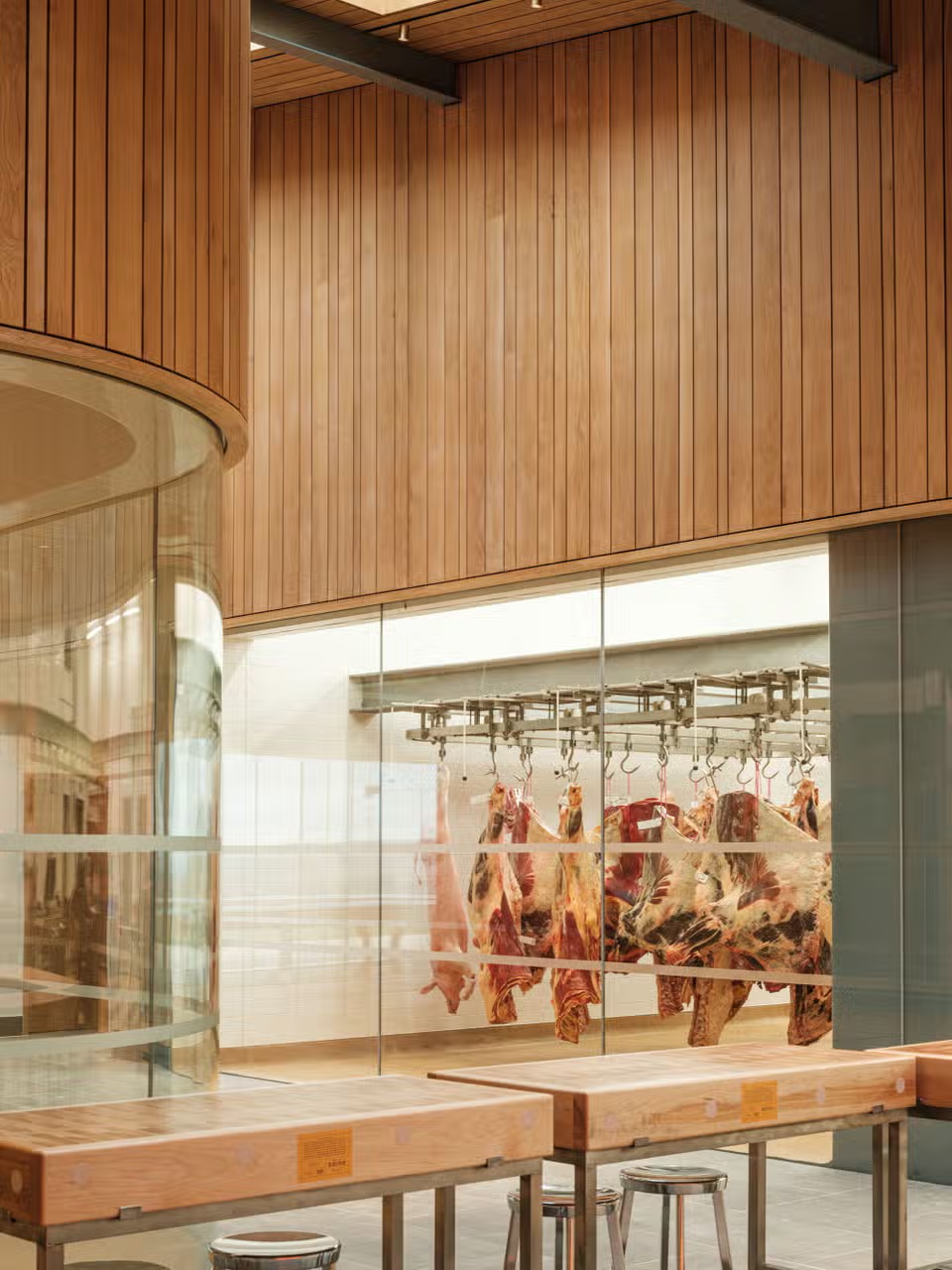
The meat chiller was equipped with a stunning glass viewing panel, allowing visitors to observe the butchery process in action.
The Result
The completed facility at Avalon Farm combines aesthetic design with practical functionality. Clad in glass and oak, the butchery reflects The Newt’s commitment to transparency and quality. It features a production area for full-carcass processing and a workshop space for training and education.
This facility now supplies beef, lamb, and venison from Avalon Farm, alongside locally sourced pork and poultry, to The Newt’s estate, shops, and online business. Visitors can experience the craft of butchery firsthand through workshops and training initiatives.
Client Testimonial
"Our new butchery has transformed the way we handle and showcase meat at The Newt. The collaborative efforts with AES Food Equipment have resulted in a facility that’s as functional as it is beautiful. It’s a space where craft and care come together, and it’s integral to our farm-to-table approach."– The Newt
Learn More
For more information about The Newt’s butchery and their commitment to high-welfare meat production, visit their official website.
Over the last 50 years, various meat rail systems have been employed to hang and transport carcass meat within meat production facilities. In this blog, we will explore these types of meat rail systems, examining the benefits and drawbacks of each, and providing recommendations on the most suitable systems for your meat processing business.
Round Bar/Tubular Systems
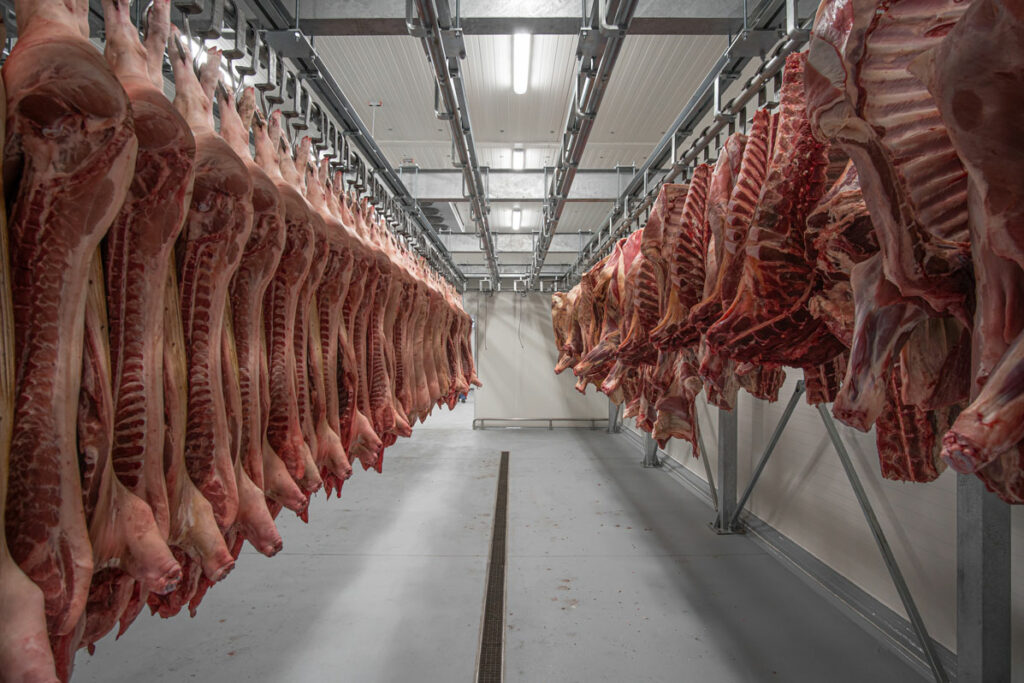
Round bar or tubular meat rail systems remain widely used in the UK across abattoirs, cutting plants, and butcheries. This system consists of a steel framework with galvanised metal hangers at varying heights, supporting steel tubes for meat skids and tubular roller hooks. Directional changes are managed via switches, available in 25, 45, and 90-degree turns, with newer rollover designs enhancing operator safety by preventing hooks from falling off the ends.
Commonly, the rail tubes are either 48mm or 60mm in diameter, with 60mm being prevalent in Europe. Notable manufacturers of round bar meat rail systems include Couedic Madore and Hocker. These systems can also feature pneumatic switches, allowing operators to change directions using a controller, where a ram turns over the switch.
Advantages:
- Cost-effective, using tubular galvanised tubes.
- Meat skids can double as hooks.
Disadvantages:
- Requires regular greasing for smooth hook movement.
- Potential safety issues with hooks detaching.
- Complex structural support may cause installation challenges.
Aluminium/Stainless Steel Twin Track Meat Rail Systems
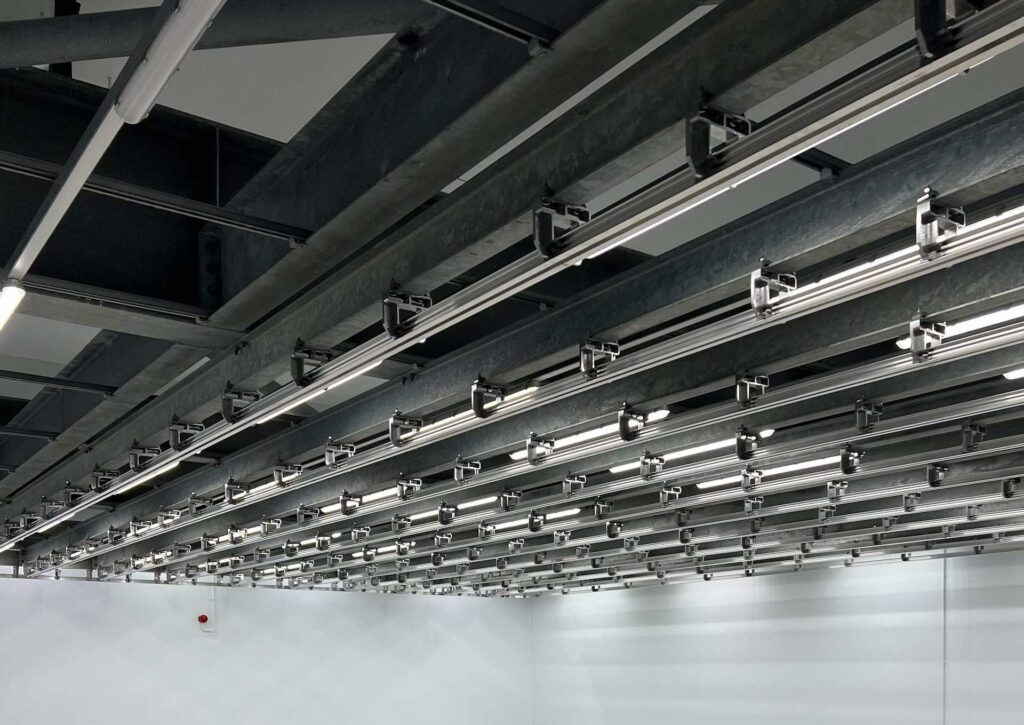
Aluminium and stainless steel twin track systems are the leading meat rail systems in the UK market, due to their numerous advantages. These systems feature a steel supporting framework with hangers that clip onto I-beams, holding two single extruded track profiles. The system utilises plastic-wheeled rollers for easy carcass movement.
Various switches, including 45 and 90-degree turns, as well as 3-way or 4-way directional switches, facilitate complex operational workflows. Notable manufacturers of twin track meat rail systems include Transuni, Biralux, Abachem and AES.
Advantages:
- High safety, preventing hook dislodgment.
- Easy carcass movement due to plastic rollers with bearings.
- No need for greasing, reducing maintenance and cleaning efforts.
- Corrosion-resistant materials like aluminium and stainless steel.
- Easy to upgrade or modify without specialist machinery.
Disadvantages:
- Space requirements for installation, particularly in smaller chillers or cold rooms.
- Necessitates a supporting structure.
Flat Bar Systems
Once common in the UK, flat bar systems are now primarily used in North American meat processing facilities. These systems, supported by a steel framework, involve a flat bar where hooks with single wheels sit on top.
Advantages:
- Cost-effective.
Disadvantages:
- Lack of available flat bar switches.
- Safety concerns with hook attachment.
- Susceptibility to rust.
Self-Supporting Aluminium Rails
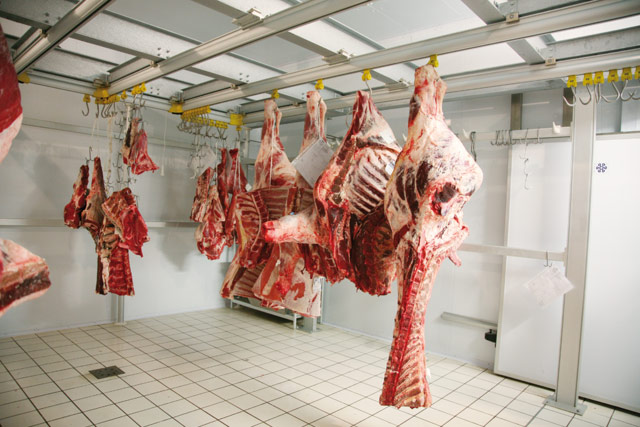
This modern European meat rail system integrates a self-supporting aluminium structure, simplifying design and installation. The system features plastic switches and pulls for directional changes, with hooks seated on small wheels inside the rail. Notable manufacturers of self supporting rail systems include Italmodular and Tonon.
Advantages:
- Streamlined design and installation process.
Disadvantages:
- Lower SWL (Safe Working Load) for hooks.
- Requires numerous supporting columns, impacting floor space.
- Potential operational delays due to sticking plastic components.
Choosing the Right Meat Rail System
Selecting the appropriate types of meat rail system depends on several factors: existing infrastructure, available supporting steelwork, facility size, and operational requirements. Generally, the aluminium twin track rail system is recommended for most meat processing facilities. At AES Food Equipment, we distribute leading suppliers of this rail type and can match your existing layouts.
For more information or to discuss your specific requirements, please contact us.